Since its establishment in 1995, EasyJet has expanded through a combination of acquisitions,[10][11] and base openings, driven by consumer demand for low-cost air travel. The group, along with associate companies EasyJet UK, EasyJet Europe and EasyJet Switzerland, operates 321 aircraft. EasyJet has its roots in the business activity of Greek-Cypriot Stelios Haji-Ioannou, who reportedly gained an interest in the aviation business after being approached as a potential investor in Virgin Atlantic's Greek franchisee. Recognising a vacant niche in the market, Stelios decided to examine the prospects for launching his airline, having secured a commitment of a £5 million loan from his father.
While studying various business models in the industry, Stelios took a significant interest in the American operator Southwest Airlines, which had successfully adopted the practice of price elasticity to be competitive with traditionally cheaper buses and attract customers that would not normally have considered air travel. In 1995, EasyJet was established by Stelios, being the first company in what would later become the EasyGroup conglomerate. Upon launch, it employed just 70 people; the company is based at London Luton Airport, which was traditionally used only by charter flights.
To encourage the company, Luton Airport chose to give EasyJet free use of a 15,000-square-foot (1,400-square-metre) building for its headquarters, which it named EasyLand; its management style typified minimal overhead, such as an early implementation of the paperless office concept. EasyJet initially operated a pair of wet leased Boeing 737-200 aircraft, capable of seating 130 passengers. These were flown on two routes: Luton to Glasgow International Airport and Edinburgh Airport.
Uitbreiding en overnames: basis voor een pan-Europese groep
In March 1998, EasyJet purchased a 40% stake in Swiss charter airline TEA Basle for 3 million Swiss francs. The airline was renamed EasyJet Switzerland and commenced franchise services on 1 April 1999, having relocated its headquarters to Geneva Airport. In 2002, rival airline Go Fly was purchased for £374 million; EasyJet inherited three new bases from Go, at Bristol Airport, East Midlands Airport and London Stansted Airport. The acquisition of Go almost doubled the number of Boeing 737-300 aircraft in the EasyJet fleet.
In 2002, the airline opened its base at Gatwick Airport. On 28 October 2017, EasyJet announced it would lease 25 former Air Berlin A320 aircraft to operate across EasyJet Europe's network, under its European AOC. Several of these aircraft were based at Berlin-Tegel Airport, before its closure. These aircraft have subsequently been transferred to Berlin-Brandenburg Airport.
Financiële en juridische ontwikkelingen tijdens het decennium
In April 2020, EasyJet became involved in a dispute with its owner and largest shareholder, Stelios Haji-Ioannou. Haji-Ioannou criticised the airline's decision not to seek to cancel the outstanding Airbus order, claiming it would create an additional £4.5 billion of capital which the airline could not afford to spend. He threatened to call a general meeting to remove a director every three weeks unless subsequent action was taken. On 19 May 2020, the company revealed that it had been the subject of a cyber-attack resulting in the release of the personal information of 9 million customers.
On 10 September 2021, the company claimed it had rejected a takeover bid from rival Wizz Air. On 30 September 2021, Stelios Haji-Ioannou and his family lost control of the company, after failing to take up the rights issue and being diluted. On 1 June 2026, amid rising jet fuel prices contributed by the 2026 Iran war, it was reported that the US investment firm Castlelake was considering a takeover of the airline. On 6 July 2026, it was reported that EasyJet had agreed in principle to a £5.5 billion takeover bid from Castlelake. On 10 July it was announced that EasyJet had accepted an alternate proposal from Apollo Global Management, valuing the business at approximately £5.7 billion, or 715p per share - an 81% premium to the closing share price on 28 May 2026, the day before Castlelake's interest was first made public. On 6 August 2026, Castlelake announced under Rule 2.8 of the Code that it did not intend to make an offer for EasyJet, ending its pursuit of the airline. Later that day, Apollo announced a firm intention to make an offer under Rule 2.7 of the Code, ahead of its 7 August deadline. The cash offer values EasyJet's entire issued and to-be-issued ordinary share capital at approximately £5.7 billion, representing a premium of 81% to the closing share price on the last undisturbed trading day and 22% to the highest closing price in the previous four years. The EasyJet board unanimously recommended the offer to shareholders.
Bedrijfsmodel en operationele kenmerken
EasyJet, like Ryanair, uses a business model pioneered by Southwest Airlines. Both airlines have adapted this model for the European market through further cost-cutting measures, such as not selling connecting flights or providing complimentary snacks on board. Initially, EasyJet's employment strategy was to maintain control with minimal union involvement. Originally, EasyJet did not allocate seats so passengers took any available seats, with the option to pay for "Speedy Boarding", which allowed them to be first onto the aircraft. Since 2012, all passengers are allocated numbered seats before boarding commences, as it was found that this does not slow down boarding times and could earn more revenue than Speedy Boarding. Passengers can receive randomly allocated seats for no charge or pay an additional fee to select specific seats.
Between the start of the COVID-19 pandemic and August 2020, EasyJet raised over £2.4 billion in new finance. EasyJet's head office is Hangar 89 (H89), a building located on the grounds of London Luton Airport in Luton, Bedfordshire; the hangar is located 150 metres from EasyLand, the previous headquarters of the airline. Hangar 89, built in 1974, has 30,000 square feet of office space and can house three aircraft the size of an Airbus A319 at one time.
Duurzaamheid en operationele prestaties
Since November 2019, EasyJet has offset the carbon emissions from all of its flights using carbon offsetting projects that meet either the Gold Standard or Verified Carbon Standard (VCS) accreditation. As a result, it is the first major airline in the world to operate net-carbon-zero flights across its entire network. The airline describes this as an "interim" measure whilst the next generation of aircraft propulsion is developed. According to its own statements, EasyJet emits 27 percent less pollutants per seat kilometer than other airlines operating the same aircraft type, and it has published an environmental charter detailing how its environmental impact is monitored and reduced.
Vestiging in Europa en filialstructuur
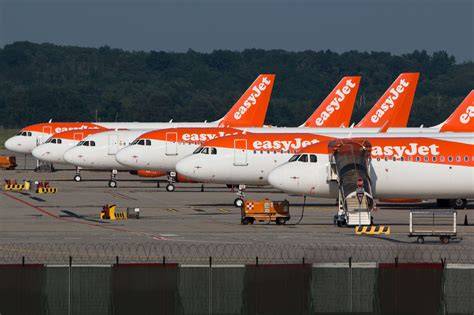
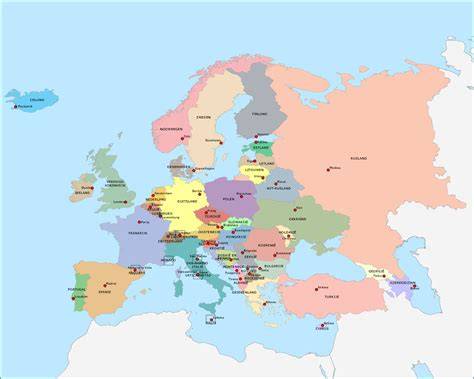
EasyJet Europe now operational after award of Austrian AOC and licence; the division into separate companies was triggered by Brexit and EU-regulations. EasyJet UK is based in Luton, while EasyJet Europe is based in Vienna and EasyJet Switzerland operates from Meyrin. EasyJet Nederland is not part of the official corporate structure presented in the draft, maar de Europese aanwezigheid wordt wel onderstreept via de pan-Europese groep.
Modernisering en klantenervaring
De Britse luchtvaartmaatschappij heeft een No-frills-concept waarbij kosten laag worden gehouden door directe verkoop via internet en callcenter, en door geen gratis maaltijden, dranken of kranten aan te bieden. In de loop der jaren is de passagierservaring aangepast met opties zoals gekozen zitplaatsen en extra services; de generatie van loyalty-programma’s omvat Flexi Fare, EasyJet Plus en andere varianten.
Subonderdeel: operationele basisbases in Duitsland
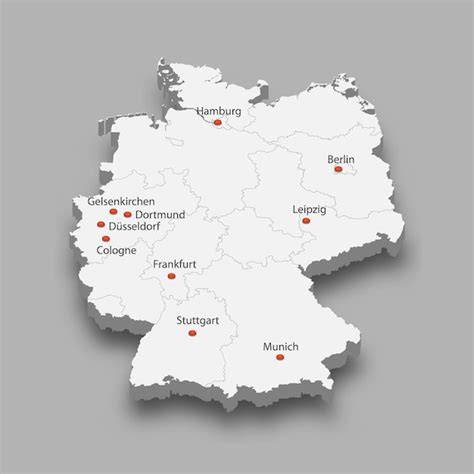
In Duitsland heeft EasyJet basisactiviteiten ontwikkeld met namen als Dortmund, Köln/Bonn, Hamburg, München, Düsseldorf en Stuttgart, met een duidelijke uitbreiding in sommige periodes en gedeeltelijke herstructureering na 2007. De inzet van vliegtuigen en routes werd steeds aangepast aan economische condities en marktvraag.
Toekomst en strategische positie
De pan-Europese structuur met drie hoofdmaatschappijen is bedoeld om vluchten binnen de EU te garanderen en toegang te behouden tot markten na Brexit, met EasyJet Europe als drijvende kracht achter Europese operaties. De groep blijft investeren in de uitbreiding van vloot en capaciteit, terwijl ze tegelijk inzet op kostenbeheersing en digitale services.
tags: #easyjet #wikipedia #nederlands